Why in news
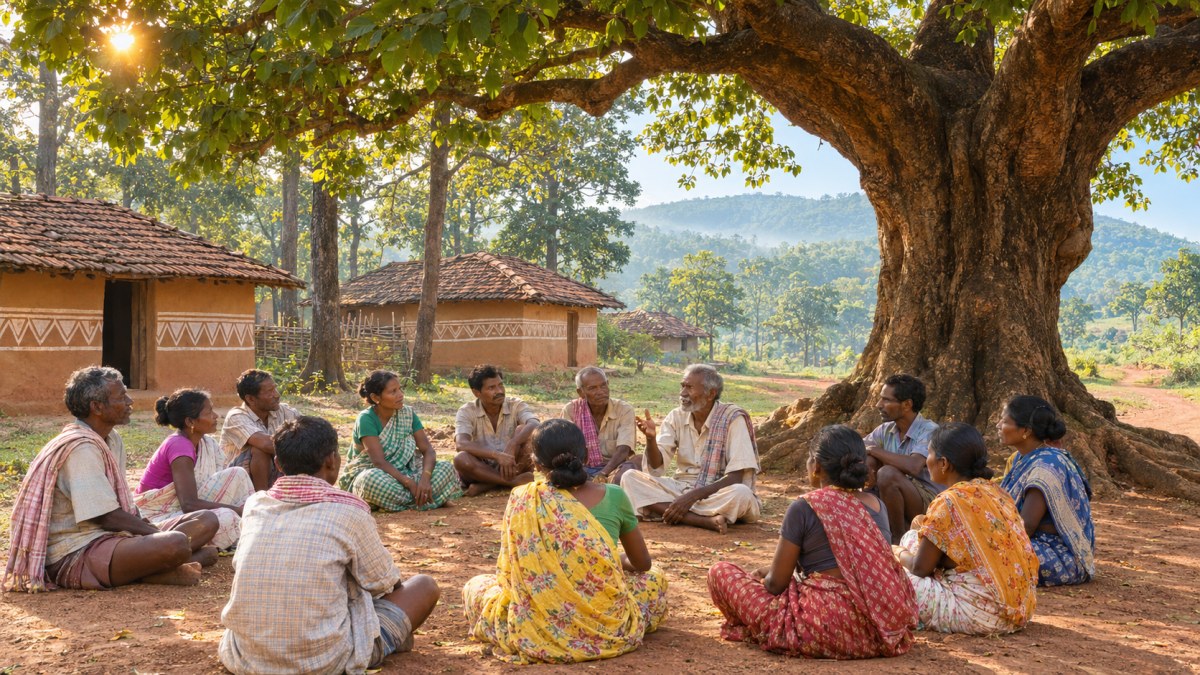
India observes Janjatiya Gaurav Divas on 15 November 2026, the 151st birth anniversary of Birsa Munda, revered as Dharti Aaba (Father of the Earth). The Prime Minister is joining the national programme at Gadchiroli in Maharashtra through video conferencing, where 246 development projects worth about ₹3,000 crore in education, health, livelihoods and community infrastructure for tribal communities are being inaugurated or started. The day also concludes a fortnight of observances held across the country from 1 to 15 November.
The Union Government declared 15 November as Janjatiya Gaurav Divas in 2021 to recognise the contribution of tribal communities to India's history and freedom struggle. The occasion links a major chapter of modern Indian history with the constitutional and legal safeguards that protect Scheduled Tribes today.
Background: Birsa Munda and the Ulgulan
Birsa Munda was born on 15 November 1875 at Ulihatu, in present-day Khunti district of Jharkhand, in the Munda community of the Chotanagpur plateau. The Mundas traditionally held land under the khuntkatti system, in which the descendants of the original clearers of forest held land jointly as a lineage. During the nineteenth century, this order was undermined by outsiders, called dikus by the tribals: landlords, moneylenders, traders and contractors who came with colonial rule. Tribal cultivators were reduced to tenants and forced labourers (beth begari), while forest laws restricted their customary use of forests.
Birsa studied briefly at a mission school, then turned to reforming Munda society. He urged his followers to give up liquor and superstition, and preached a vision of a golden age in which the Mundas would regain their land and freedom. His followers came to see him as a messenger of God. In 1899–1900 he led the Ulgulan, the "Great Tumult", attacking police stations, churches and other symbols of colonial and diku power. The movement aimed to drive out outsiders and establish Munda rule.
Birsa was captured in early 1900 and died in Ranchi jail on 9 June 1900, aged about 25. The movement was suppressed, but it forced the colonial government to act. The Chotanagpur Tenancy Act, 1908 recognised khuntkatti rights and restricted the transfer of tribal land to non-tribals, and it remains a key land law in Jharkhand.
Key facts for Prelims
Tribal movements of colonial India
| Movement | Period | Region | Key leaders and features |
|---|---|---|---|
| Kol Rebellion | 1831–32 | Chotanagpur | Against land transfer to outsiders and exploitation by moneylenders |
| Santhal Hul | 1855–56 | Rajmahal hills (Damin-i-koh) | Sidhu and Kanhu Murmu; afterwards the Santhal Parganas was created as a separate district |
| Munda Ulgulan | 1899–1900 | Chotanagpur (Ranchi, Khunti) | Birsa Munda; led to the Chotanagpur Tenancy Act, 1908 |
| Tana Bhagat Movement | 1914 onwards | Chotanagpur | Oraon reform movement; later linked with the Gandhian national movement |
| Rampa Rebellion | 1922–24 | Godavari hill tracts (Andhra) | Alluri Sitarama Raju; against forest restrictions |
A common factor in these nineteenth-century tribal uprisings was the arrival of moneylenders, traders and revenue farmers as middlemen, who dispossessed tribals of land and bound them in debt.
Constitutional safeguards
- Article 342: the President specifies the Scheduled Tribes of a State after consultation with the Governor; only Parliament can later include or exclude communities by law.
- Article 244: the Fifth Schedule applies to Scheduled Areas in States other than Assam, Meghalaya, Tripura and Mizoram; the Sixth Schedule applies to tribal areas in those four States.
- Article 338A: the National Commission for Scheduled Tribes, created by the 89th Amendment in 2003 by separating it from the commission for Scheduled Castes.
- Article 275(1): grants from the Union to States for tribal welfare and for raising the level of administration in Scheduled Areas.
Fifth Schedule versus Sixth Schedule
| Feature | Fifth Schedule | Sixth Schedule |
|---|---|---|
| Where | Scheduled Areas in ten States, including Jharkhand, Odisha, Chhattisgarh, Madhya Pradesh and Maharashtra | Tribal areas of Assam, Meghalaya, Tripura and Mizoram |
| Declared by | President by order, after consulting the Governor | Listed in the Schedule itself |
| Key institution | Tribes Advisory Council of up to 20 members, three-fourths of whom are Scheduled Tribe members of the State Legislative Assembly | Autonomous District Councils of up to 30 members, of whom up to four are nominated by the Governor |
| Role of Governor | Can direct that an Act of Parliament or the State Legislature shall not apply, or apply with modifications; can make regulations, which need the President's assent | Assents to laws made by the Councils; can create or reorganise autonomous districts |
| Land | Regulations may prohibit or restrict transfer of land by or among tribals and regulate money-lending | Councils can make laws on land, forests other than reserved forests, shifting cultivation and customs |
| Reporting | Governor reports annually to the President on the administration of Scheduled Areas | Councils have legislative, executive and some judicial powers |
In Scheduled Areas, the State Government does not lose its executive power; the executive power of the Union extends to giving directions to the State on administering these areas. In the Samatha judgment of 1997, the Supreme Court held that transferring tribal land in Scheduled Areas to private mining companies was void under the Fifth Schedule framework and the State's land transfer regulations.
Laws that empower Gram Sabhas
- Panchayats (Extension to the Scheduled Areas) Act, 1996 (PESA): extends Part IX of the Constitution to Fifth Schedule areas with special powers. The Gram Sabha approves development plans, identifies beneficiaries, must be consulted before land acquisition, and has powers to prevent land alienation, control money-lending, manage village markets and regulate liquor. Ownership of minor forest produce is vested in Panchayats at the appropriate level and the Gram Sabha. The recommendation of the Gram Sabha or Panchayat is mandatory before granting prospecting licences or mining leases for minor minerals.
- Forest Rights Act, 2006: recognises individual and community forest rights of Scheduled Tribes and other traditional forest dwellers. The Gram Sabha initiates the process of determining rights. Other traditional forest dwellers must show residence for three generations (75 years). Habitat rights are available to Particularly Vulnerable Tribal Groups (PVTGs). The nodal ministry is the Ministry of Tribal Affairs.
Recent initiatives
- PM-JANMAN (Pradhan Mantri Janjati Adivasi Nyaya Maha Abhiyan), launched on Janjatiya Gaurav Divas in 2023 from Khunti, targets housing, roads, water, health and education for the 75 PVTGs.
- Dharti Aaba Janjatiya Gram Utkarsh Abhiyan (2024) aims to saturate tribal-majority villages with basic services through convergence of schemes across ministries.
Mains angle: issues
- Weak implementation of PESA: several States framed PESA rules late, and Gram Sabha powers over land, minor forest produce and minerals are often diluted by State laws.
- Forest rights: rejection of claims without due process, low recognition of community forest rights, and conflict with conservation and project clearances.
- Land alienation and displacement: mining, dams and industry in mineral-rich tribal belts have displaced large numbers, often with inadequate rehabilitation.
- Development gaps: lower outcomes in health, nutrition, education and access to services, especially among PVTGs.
- Identity and culture: erosion of tribal languages, customary institutions and knowledge systems.
Way forward
- Full implementation of PESA rules and real decision-making power for Gram Sabhas over land, forests and minerals.
- Time-bound recognition of individual and community forest rights, with support for community forest management.
- Free, prior and informed consent of Gram Sabhas for projects in Scheduled Areas, with fair benefit sharing.
- An active role for Tribes Advisory Councils and regular, meaningful Governor's reports on Scheduled Areas.
- Education in tribal languages at the primary stage, and documentation of tribal history and knowledge.
Link to static syllabus
- GS Paper I: tribal and peasant movements in modern Indian history; the role of tribal communities in the freedom struggle.
- GS Paper II: Fifth and Sixth Schedules, PESA, the Forest Rights Act, welfare schemes for vulnerable sections and the bodies created for their protection.
- GS Paper III: land acquisition, displacement and inclusive development in mineral-rich regions.
PYQ connection
UPSC Prelims has asked which event is described as the Ulgulan (2020), what was a common factor in nineteenth-century tribal uprisings (2011), and which measures followed the Santhal uprising (2018). On the constitutional side, questions have covered the purpose of the Fifth and Sixth Schedules (2015), the Schedule under which transfer of tribal land for mining can be declared void (2019), the consequence of bringing an area under the Fifth Schedule (2022), the notification and reporting of Scheduled Areas (2023 and 2025), the powers of the Gram Sabha under PESA (2012), the nodal ministry for the Forest Rights Act (2021), and PVTGs (2019).
Revision takeaway
- Janjatiya Gaurav Divas: 15 November, declared in 2021; 2026 marks Birsa Munda's 151st birth anniversary.
- Birsa Munda: born 1875 at Ulihatu; led the Ulgulan of 1899–1900 against dikus and colonial rule; died in Ranchi jail in 1900.
- Chotanagpur Tenancy Act, 1908 recognised khuntkatti rights and restricted land transfer.
- Fifth Schedule: Scheduled Areas declared by the President; Tribes Advisory Council; Governor's regulations need the President's assent.
- Sixth Schedule: Assam, Meghalaya, Tripura and Mizoram; Autonomous District Councils.
- PESA, 1996 and the Forest Rights Act, 2006 place the Gram Sabha at the centre of tribal self-governance.
Practise next: Attempt related MCQs and revise quick notes on this topic in the IASLadder app.
Practicing UPSC Prelims PYQs?
Practice 45+ years of topic-wise previous year questions (1979–2026) with in-depth explanations on our mobile app.
Never miss a daily update
Join our official Telegram channel or WhatsApp group for daily current affairs and test alerts.
Frequently Asked Questions
Test yourself · 10 practice questions
Practice MCQs on Janjatiya Gaurav Divas: Birsa Munda, Ulgulan and Tribal Safeguards
Check how well you understood this article with 10 UPSC-style multiple-choice questions — instant answers with detailed explanations.
View all questions with answersTags
Related Articles

Stand-Up India and MUDRA Credit Guarantee: Schemes Extended to 2031
The Union Cabinet has continued the Credit Guarantee Fund for Micro Units and the Stand-Up India Scheme up to March 2031. This guide explai…

Audit Diwas: The CAG, Public Accounts and Parliamentary Control
On Audit Diwas, the CAG marked 166 years of the institution. This article explains Articles 148 to 151, the safeguards of the CAG's indepen…

Fertiliser Subsidy for Rabi 2026-27: Nutrient Based Subsidy Explained
The Cabinet has approved about ₹62,370 crore under the Nutrient Based Subsidy for P&K fertilisers in Rabi 2026-27, 64 per cent more than la…
Keep reading
More in Current Affairs
- Current Affairs Right to Education in India: Article 21A and the RTE Act
- Current Affairs Legal Services Day: Legal Aid and Lok Adalats
- Current Affairs COP31: Climate Finance, Equity and India’s Priorities
- Current Affairs Tsunami Preparedness: From Ocean Warning to Coastal Safety
- Current Affairs Pumped Storage Hydropower: Energy, Efficiency and the Grid
- Current Affairs Khelo India Sports Goods Scheme: Manufacturing and MSMEs