National Unity Day 2026: the historical and constitutional connection
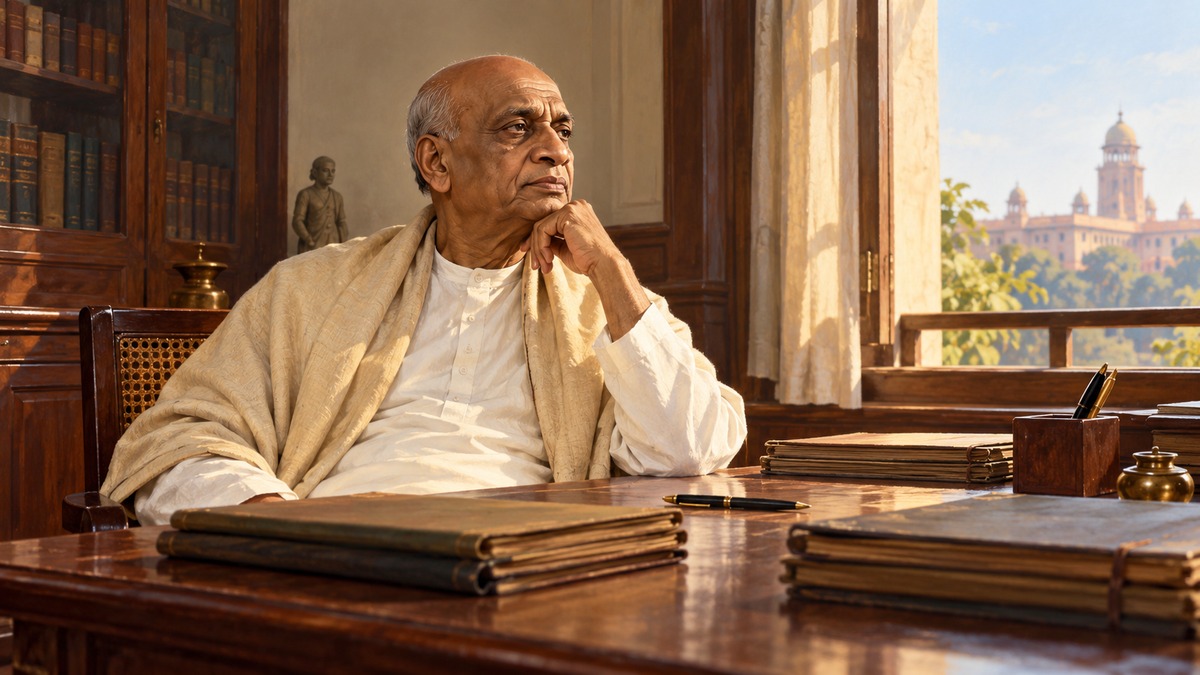
India observes Rashtriya Ekta Diwas, or National Unity Day, on 31 October, the birth anniversary of Sardar Vallabhbhai Patel. Born in 1875, Patel’s 151st birth anniversary falls in 2026. The announced programme at Ekta Nagar, Gujarat, includes National Unity Day celebrations on 31 October. The advance programme identifies Vande Mataram as the overarching theme and places special emphasis on the security forces’ achievements against Left-Wing Extremism.
The occasion opens a broader question: how did a territory containing British-administered provinces and hundreds of princely states become a constitutional Union? The answer involves negotiation, legal instruments, administrative integration and subsequent reorganisation. These were connected processes, but they were neither identical nor completed everywhere on a single date.
For UPSC CSE and State PCS, the subject bridges post-independence consolidation in GS I and the Union, federalism and constitutional procedures in GS II. Understanding the sequence helps avoid confusing a ruler’s accession in 1947 with Parliament’s present power to alter a state’s boundaries.
The problem inherited at independence
British India and the princely states did not have the same administrative relationship with the British Crown. Provinces were under British administration, while princely rulers governed their territories under British paramountcy. Their authority was therefore constrained by a superior imperial power even though their internal arrangements differed from those of the provinces.
The Indian Independence Act, 1947 provided for the lapse of British suzerainty over the Indian states. This was not a clause automatically merging every princely state into India. A new relationship had to be established through accession and subsequent arrangements. At the same time, geographical interdependence made fragmentation a serious practical problem.
Railways, postal networks, trade routes and security concerns crossed princely boundaries. A patchwork of disconnected political authorities could obstruct communication and make coordinated administration difficult. Integration therefore concerned the daily functioning of a country as well as its territorial outline. The people living in these territories were also stakeholders, rather than merely subjects of agreements between rulers.
Patel, Menon and the work of integration
Patel served as independent India’s first Deputy Prime Minister and Home Minister. He provided political leadership in bringing princely states into the Indian Union. V. P. Menon, the senior official associated with the States Department, played a major role in negotiations and the practical formulation of arrangements.
The process combined persuasion, assurances, political bargaining and responses to difficult disputes. It should not be reduced either to a series of ceremonial signatures or to a claim that every state was integrated through military action. Different territories presented different political and administrative problems, and the responses varied accordingly.
Patel’s leadership was central, but the task also involved officials, other political leaders and popular aspirations. Distinguishing leadership from sole authorship produces a more accurate account. In a Mains answer, explaining how negotiation and institution-building worked is more useful than relying only on descriptive titles or celebratory language.
Accession, continuity and merger are different ideas
| Arrangement or process | Main purpose | Distinction to retain |
|---|---|---|
| Instrument of Accession | Established accession to a Dominion on specified subjects | Initial accession did not itself transfer every aspect of internal administration |
| Standstill arrangement | Maintained continuity in existing administrative and service arrangements | Continuity of services was not the same as full political merger |
| Merger and administrative integration | Reorganised governance and brought territories into larger administrative units | A further process beyond initial accession |
| Later state reorganisation | Redrew internal state arrangements within independent India | Not a repetition of the lapse of British paramountcy |
The initial accession framework generally focused on defence, external affairs and communications. These subjects addressed concerns that crossed the boundaries of individual states. Agreement on them helped establish a common political relationship while leaving further questions of internal governance to subsequent arrangements.
Consider a hypothetical agreement that keeps postal and transport services operating during a political transition. Its immediate function is administrative continuity. One cannot infer from that function alone that the ruler has transferred all governing powers. Equally, accession on specified subjects does not by itself establish that a territory has already acquired its final post-independence administrative boundaries.
Different territories followed different paths
Junagadh and Hyderabad illustrate why integration cannot be explained through one uniform sequence. Junagadh’s ruler chose accession to Pakistan, while the territory subsequently came under Indian administration; a plebiscite in February 1948 strongly favoured India. Hyderabad’s integration followed military action in September 1948, commonly known as Operation Polo.
These examples do not establish that a plebiscite or military action was the standard route for every princely state. They show the importance of identifying the particular political context. A sound comparison separates the instrument used, the timing and the outcome instead of transferring one state’s experience to all others.
Rajasthan offers another perspective: integration occurred in stages through the joining of princely territories into larger unions and later adjustments. Its present configuration was not created by a single accession signature. This demonstrates that accession to India and the construction of a workable state administration were related but distinct tasks.
From integration to reorganisation within the Union
After independence, the organisation of states raised questions of language, administrative convenience, economic relationships and public participation. The States Reorganisation Act, 1956 was a major step in restructuring the internal political map. Its appointed day was 1 November 1956. It belongs to a later phase than the initial accession arrangements of 1947.
Recognising regional identities through internal arrangements need not mean separating those regions from the country. A demand for a different administrative unit within India and a claim to leave India are conceptually different. The former can be considered through constitutional processes; the Constitution does not confer a unilateral right of secession on states.
Reorganisation also requires practical decisions about institutions, personnel, assets, liabilities and public services. Drawing a new line is not enough. Administrative preparation and dialogue help prevent disruption to citizens while a legal change takes effect. This remains an important governance lesson from the history of consolidation.
Articles 1 to 4: reading the constitutional framework
Article 1 describes India as a Union of States. Its territorial framework includes states, Union territories and territories that may be acquired. Article 2 empowers Parliament to admit new states into the Union or establish them on terms and conditions it considers appropriate. Article 3 concerns the formation of new states and changes to the area, boundaries or names of existing states.
Under Article 3, the relevant bill requires the President’s recommendation before introduction in either House of Parliament. Where a proposal affects a state’s area, boundaries or name, the President must refer it to that state’s legislature for its views, with the prescribed period, including any extension, having expired. Seeking views is a procedural requirement; obtaining the state legislature’s consent is not a constitutional veto condition.
For example, in a hypothetical proposal to divide an existing state, an adverse view expressed by its legislature does not by itself prevent Parliament from proceeding. This does not make consultation optional. The distinction is between a required opportunity to express views and a requirement that those views be favourable.
Article 4 enables the necessary changes to the First and Fourth Schedules and supplemental, incidental and consequential provisions associated with laws under Articles 2 and 3. Such a law is not treated as an amendment under Article 368. This specific route should not be mistaken for a general power to rewrite unrelated constitutional provisions through an ordinary reorganisation law.
Unity, diversity and the citizen
National integration is not equivalent to making every community culturally identical. Article 29(1) protects the right of a section of citizens with a distinct language, script or culture to conserve it. The provision’s wording concerns any such section of citizens; it should not automatically be narrowed to religious minorities alone.
Article 51A(c) places on citizens the duty to uphold and protect India’s sovereignty, unity and integrity. The Preamble connects fraternity with individual dignity and national unity. Read together, these ideas support belonging through equal citizenship, respect and participation. A cultural conservation claim is not, merely by its existence, a claim to territorial separation.
For governance, unity requires institutions that people can trust. Fair access to services, respect for different languages, constitutional dispute resolution and cooperation between governments can strengthen that trust. Symbolic observances create occasions for reflection, while effective administration gives the principle practical meaning in everyday life.
Mains perspective and revision points
A balanced answer can organise the subject into three stages: bringing territories into a shared political framework, building workable administration and sustaining a democratic Union. It should recognise Patel’s contribution while explaining the legal and institutional mechanisms. Avoid suggesting that today’s constitutional processes are merely unchanged versions of agreements signed by princely rulers.
- The lapse of paramountcy and accession were different legal developments.
- Initial accession on specified subjects was distinct from complete administrative integration.
- Junagadh, Hyderabad and Rajasthan illustrate different routes and stages.
- State reorganisation changes internal arrangements without creating a right to secede.
- Under Article 3, consultation for views must be distinguished from consent.
- Article 4 provides a specific consequential route, not an unlimited amendment power.
- National unity and the conservation of cultural diversity can coexist.
Practise next: Attempt the separate MCQs and revise the integration and federalism notes in the IASLadder app.
Practicing UPSC Prelims PYQs?
Practice 45+ years of topic-wise previous year questions (1979–2026) with in-depth explanations on our mobile app.
Never miss a daily update
Join our official Telegram channel or WhatsApp group for daily current affairs and test alerts.
Frequently Asked Questions
Test yourself · 10 practice questions
Practice MCQs on National Unity Day: Patel, Integration and India’s Union
Check how well you understood this article with 10 UPSC-style multiple-choice questions — instant answers with detailed explanations.
View all questions with answersTags
Related Articles

Pumped Storage Hydropower: Energy, Efficiency and the Grid
Pumped storage moves electricity across time by raising water and later releasing it through turbines. Understand why energy losses do not …

Khelo India Sports Goods Scheme: Manufacturing and MSMEs
The new sports-goods manufacturing scheme connects equipment production with industrial policy. Explore shared facilities, anchor firms, ce…
PM Viksit Gram Swaraj Yojana: Panchayats and Local Governance
The new rural-governance scheme connects Panchayat planning, capacity building and financial accountability. Understand its approved design…
Keep reading
More in Current Affairs
- Current Affairs Immersive Technologies: AR, VR and Mixed Reality
- Current Affairs Agrivoltaics: Growing Crops Alongside Solar Power
- Current Affairs SIMBEX 2026: India–Singapore Maritime Cooperation
- Current Affairs Green Diwali 2026: Clean Air and Governance for UPSC
- Current Affairs Children’s Internet Rights and Online Safety: Supreme Court Order
- Current Affairs How to Use PIB, Yojana and PRS for UPSC: What Each Source Gives and How Much to Read